


Your Professional Blowout Maintenance Guide

The first night after a salon blowout is easy. Your hair has movement, shine, and that polished finish that makes getting dressed feel more fun. The real secret is what happens after you leave the chair. This professional blowout maintenance guide will help you protect the look for several days without flattening your roots, coating your strands in product, or fighting Boca Raton humidity every morning.
A long-lasting blowout starts with the right salon technique, but your at-home habits decide whether it stays soft and full or loses its shape by day two. Think of maintenance as a light touch, not a complete restyle. Your goal is to preserve the work already done, then refresh only the areas that need attention.
Start With the Right Nighttime Routine
Your pillow can either support your blowout or undo it. Before bed, make sure your hair is fully dry. Even slightly damp roots can dry into a crease, while humidity from a warm shower can leave the crown looking flat by morning.
For most hair types, a loose high ponytail is the simplest way to protect body overnight. Gather your hair at the top of your head with a soft silk or satin scrunchie, keeping it loose enough that it does not pull at the scalp. This lifts the roots away from the pillow and helps your style keep its bounce. If your hair is shorter, gently clip the front sections away from your face instead.
A silk or satin pillowcase is a worthwhile swap, especially for color-treated, highlighted, or frizz-prone hair. Cotton can create friction that roughens the cuticle and makes a smooth blowout look fuzzy. Satin reduces that friction, so you wake up with fewer tangles and less need for heat styling.
Do not tightly braid a fresh blowout unless your stylist specifically recommends it for your texture. Braids create beautiful waves on some hair types, but they can also leave a visible bend when your goal is a smooth, glossy finish.
Refresh Your Blowout Without Starting Over
The best refresh is targeted. Repeating a full blow-dry every day may feel satisfying, but too much heat can make hair feel dry and can shorten the life of a dimensional color service. Instead, identify the one or two things that changed overnight.
If your roots look flat, use dry shampoo before you see oil. Hold it several inches from the scalp, apply lightly at the crown and around the hairline, then let it sit for a minute before massaging it in. This gives the formula time to absorb oil and add grip. Applying too much at once can leave hair dull, stiff, or harder to brush through.
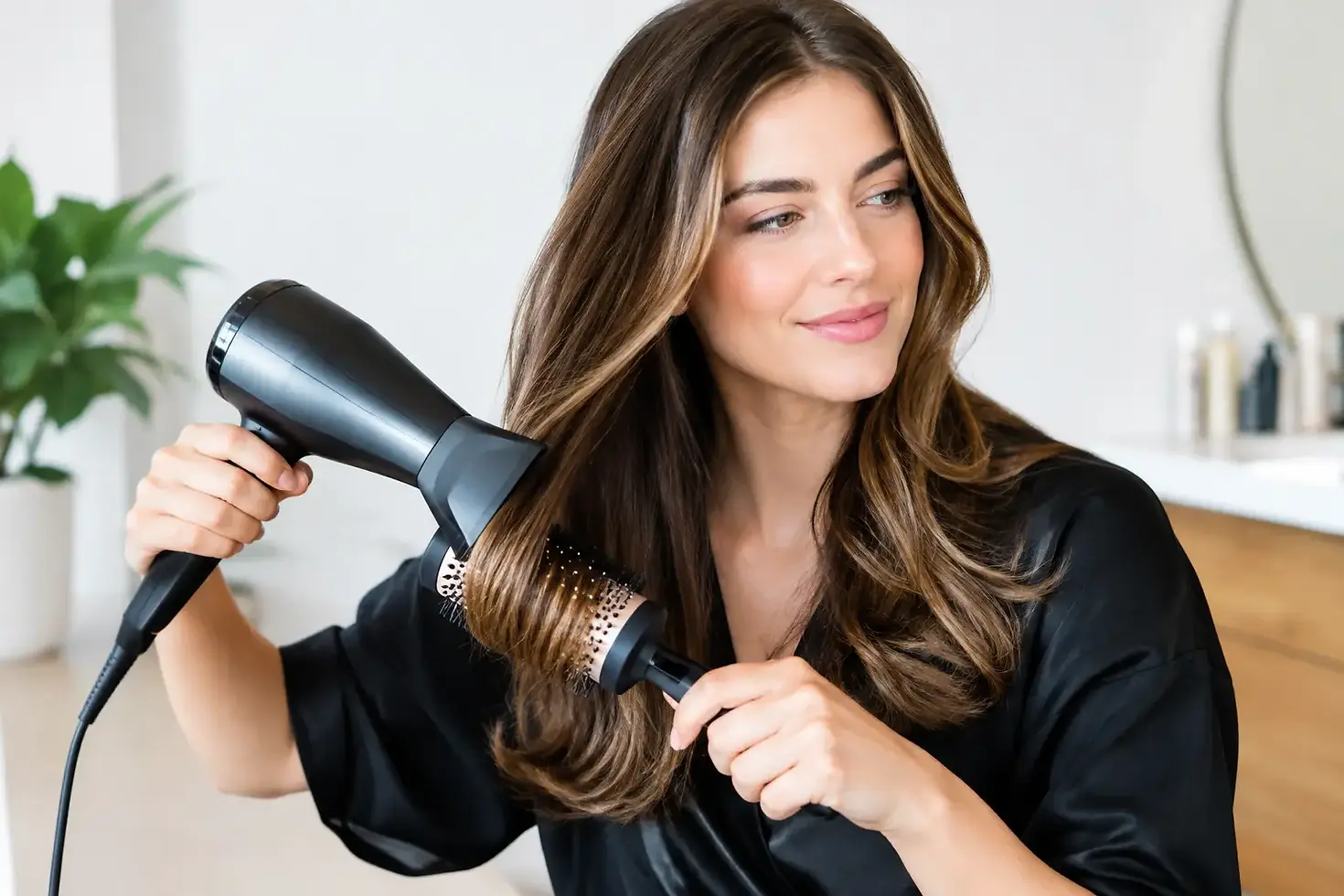
For bent ends or face-framing pieces, use a round brush and blow-dryer only where needed. Aim the airflow downward to smooth the cuticle, then roll the section away from the face and let it cool in the brush for a few seconds. A cool shot helps set the shape without adding another layer of product.
Hot rollers are another excellent option when the lengths still look good but the style needs more lift. Set them primarily through the crown and top sections, not throughout every inch of hair. Once they cool, remove them gently and separate with your fingers. A brush can work, but over-brushing often turns polished volume into unwanted fluff.
Be Strategic About Moisture and Humidity
South Florida weather asks a lot of a blowout. A quick walk from the car, a humid patio lunch, or a workout can introduce enough moisture to change the texture at your roots. You cannot control the forecast, but you can avoid the habits that make frizz worse.
Keep shower steam away from your hair as much as possible. Use a shower cap that fully covers your hairline, then secure long hair in a loose bun underneath. Afterward, wait until the bathroom has aired out before removing the cap. Stepping directly from a steamy shower into cooler air is an easy way to invite frizz.
Use a lightweight humidity-resistant finishing product if your stylist has recommended one for your hair type. Fine hair usually needs a mist or flexible spray, while thicker or coarser textures may benefit from a small amount of smoothing cream through the mid-lengths and ends. The trade-off is simple: more product can give more control, but it can also make a blowout lose movement. Start with less than you think you need.
Avoid repeatedly touching your hair throughout the day. Hands transfer oils, and constant fluffing can break apart the smooth finish your stylist created. If you need to adjust your style, lift at the roots with your fingertips rather than running your hands through the lengths.
Know When to Use Heat and When to Skip It
Heat tools are helpful maintenance tools, not the answer to every flyaway. A professional blowout has already been shaped with heat, so aim for low to medium settings when refreshing at home. Always use a heat protectant if you are picking up a curling iron, flat iron, or blow-dryer.
A curling iron is best for reviving a few sections that have fallen, particularly around the face or at the ends. Wrap larger sections than you normally would, keep the iron moving, and leave the ends out slightly for a modern, soft finish. Tight curls can make the refreshed areas look disconnected from the rest of your blowout.
If your hair is naturally textured, smooth only the sections that need it. This is especially useful after a keratin treatment, when hair may dry more smoothly but still react to moisture at the hairline. A quick pass around the fringe and crown can be enough.
If your ends feel dry or your hair starts to look puffy after repeated touch-ups, skip the heat for a day. A low, loose bun, a polished ponytail, or a chic clip can extend the time between washes while giving your hair a break.
Make Your Wash Schedule Work for Your Hair
There is no universal rule that says a blowout must last a certain number of days. Fine hair may need a refresh or wash sooner because oil travels quickly from scalp to strand. Thick, dry, curly, or color-treated hair may hold a blowout beautifully for four days or longer. Your scalp, workout routine, and preferred amount of volume all matter.
When it is time to wash, use products selected for your hair goals rather than reaching for the strongest cleanser in the cabinet. Over-cleansing can leave color-treated hair looking less reflective and can make the scalp compensate with more oil. On the other hand, if you have used dry shampoo for multiple days, you need a thorough cleanse to remove buildup before your next blowout.
Condition mainly through the mid-lengths and ends if volume is your priority. Heavy conditioner at the roots can make clean hair fall flat faster. A weekly mask can be a smart addition for blonding, balayage, or heat-styled hair, but choose one that suits your current needs. Protein-heavy formulas can help compromised hair, while moisture-focused treatments are often better for softness and flexibility.
A Professional Blowout Maintenance Guide for Special Plans
If you have an event, dinner, photos, or a big work presentation on day three or four, plan your refresh around the style you want. Do not wait until the last ten minutes. Give dry shampoo time to work, set a few rollers while you do makeup, and allow any curled sections to cool before brushing them out.
For extra polish, part your hair differently than usual. A deep side part can create instant volume and glamour, while a centered part looks sleek and modern when the roots are clean. This small change often brings new life to a blowout without additional heat.
If you are unsure which products or maintenance routine suit your texture, color, or extension method, bring that question to your next appointment. At Bliss Salon & Spa, your stylist can help you build a routine around your real life, whether that means gym mornings, humid weekends, or an event-filled calendar. A great blowout should make your week easier, not add another task to it.


Comments