


.png)
.jpg)

Color Correction Before After: What Really Changes

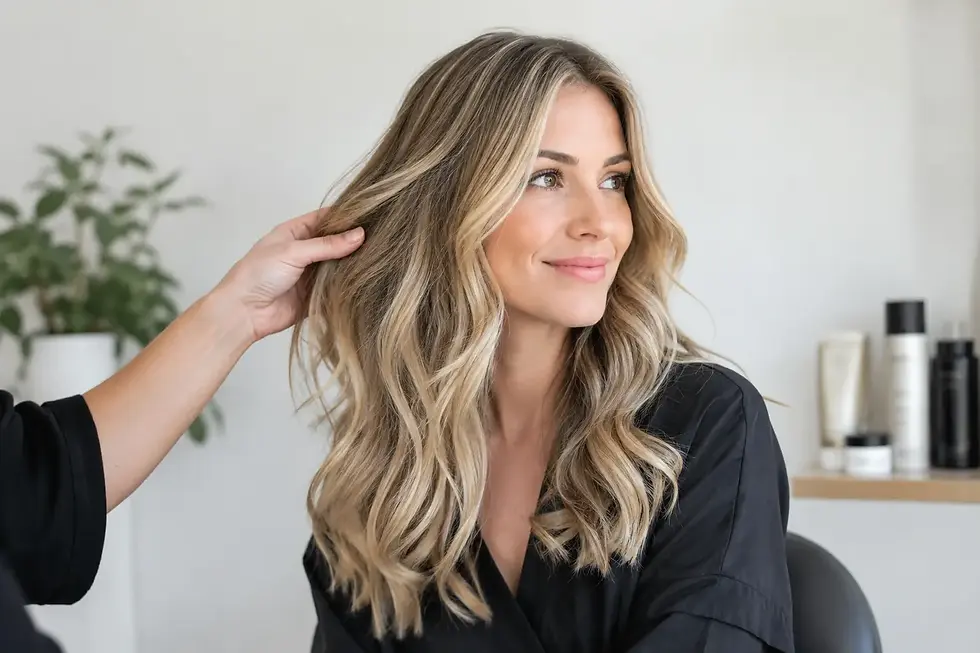
A dramatic color correction before after can look like magic: brassy bands disappear, uneven blonde becomes expensive-looking dimension, and a too-dark box color starts to feel wearable again. But the best transformations are not rushed or copied from a photo. They begin with an honest conversation about your hair history, your goal, and what will keep your hair looking beautiful after you leave the salon.
Color Correction Before and After Is More Than a New Shade
Color correction is the art and science of adjusting unwanted tone, uneven placement, overprocessed areas, or a result that simply does not feel like you. It may be needed after at-home color, an old highlight pattern, a color service that went warmer or darker than expected, chlorine exposure, or months of growing out a previous look.
The “before” matters just as much as the “after.” A skilled colorist looks beyond the surface color to assess the underlying pigment, the condition of the hair, porosity, previous formulas, and where the hair has been lightened before. Two heads of hair can appear similarly orange or too dark, yet require completely different plans.
That is why a color correction is rarely one-size-fits-all. Sometimes the answer is strategic highlights and a toner. Sometimes it means gently removing artificial pigment, blending the root, adding depth back into overly light ends, or building toward the target shade over multiple appointments. The goal is not just a prettier photo at the chair. It is a result that looks intentional in real life and feels healthy enough to style.
What Changes in a Great Color Correction Before After
The most noticeable change is often tone. Brassiness can be softened into a creamy, neutral, or cool blonde. Orange-red warmth can be balanced into a richer brunette. Overly ashy color can be warmed just enough to bring skin tone and shine back to life. “Correct” does not always mean icy blonde or dark espresso. It means a tone that suits your features, lifestyle, and color goal.
Placement is another major part of the transformation. Harsh highlight stripes, grown-out lines, and patchy sections can be blended with lowlights, lived-in balayage, face-framing brightness, or a carefully placed root melt. This creates movement, making the hair look fuller and more polished even when it is worn in a simple blowout or ponytail.
Then there is condition. Lightening, repeated permanent color, and heat styling can leave hair feeling rough or looking dull. A thoughtful correction respects what the hair can handle in one visit. Your colorist may recommend a bond-building treatment, a gloss for shine, a trim to remove fragile ends, or a pause before taking the hair any lighter. That is not a compromise. It is how beautiful color stays beautiful.
The Consultation Sets the Result Up for Success
Bring inspiration photos, but think of them as a direction rather than a guarantee. A photo shows the final lighting, styling, and filter, not the starting point underneath. The most useful information you can share is your color history from the last few years, including box dye, henna, temporary color, toner, highlights, keratin services, and any color removers.
Be open about your non-negotiables, too. Maybe you need gray coverage at the root. Maybe you want to stay blonde but cannot spend every six weeks in the salon. Maybe your priority is getting rid of red tones without making your hair look flat. You talk, we listen and collaborate - because your desired maintenance level is part of the formula.
A colorist may recommend a strand test when there is uncertainty about how old color will lift or how the hair will respond. This small step can prevent big surprises. It helps reveal whether the hair can safely reach the desired level that day, what warmth may appear during lightening, and which toning direction will produce the most flattering result.
At Bliss Salon & Spa, this consultative approach keeps the focus where it belongs: Your Voice. Our Expertise. Hair You’ll Love.
Why Some Corrections Take More Than One Appointment
The internet loves a one-session transformation, but healthy hair does not always work on a content schedule. Going from very dark artificial color to a bright, cool blonde is one of the clearest examples. Dark dye tends to reveal red, orange, and gold pigments as it is lifted. Reaching a pale blonde too quickly can leave the hair dry, uneven, or vulnerable to breakage.
Multiple sessions allow the colorist to lift gradually, refine warmth at each stage, and protect the integrity of the hair. In between, a gloss, lowlights, or dimensional highlights can make the transition look intentional rather than unfinished. You can still leave each appointment feeling polished, even while working toward a bigger color goal.
Timing also depends on density and length. Thick, long hair with years of color buildup naturally requires more product and more detailed sectioning than fine, virgin hair. If your correction involves banding, uneven bleach, or very porous ends, the service can be especially meticulous. Plan for a longer appointment and avoid scheduling something immediately afterward if possible.
Your Appointment May Include These Steps
While every plan is customized, a correction often follows a careful sequence:
A consultation and hair-history review to identify the safest path forward.
A controlled lightening or color-removal service where needed, sometimes with different formulas for roots, mid-lengths, and ends.
Toners, glosses, lowlights, or a root melt to balance tone and create dimension.
Conditioning support, a precision trim if needed, and styling that lets you see the color from every angle.
The formulas and order can change based on your hair. For example, overly light, porous ends may need depth before a toner can hold evenly. Hair that is too dark may need warmth lifted first, then neutralized afterward. This is exactly why professional correction is more detailed than choosing a box labeled “ash blonde” or “cool brown.”
How to Make the After Last
A beautiful correction deserves an easy maintenance plan. Your colorist can recommend when to return for a gloss, root touch-up, highlight refresh, or trim based on your exact service. Lived-in balayage may grow out softly for longer, while a bright all-over blonde or gray coverage often needs a more regular schedule.
At home, use professional color-safe shampoo and conditioner, keep hot tools at a reasonable temperature, and use heat protection every time you blow-dry or curl. If your blonde is prone to warmth, a purple or blue-toning product can help, but moderation matters. Overusing it can leave porous hair dull, smoky, or uneven. For brunettes, a shine-enhancing gloss service between major color appointments can keep rich tones from looking faded.
Sun, pool water, hard water, and frequent washing all affect how color wears in Boca Raton. A leave-in protectant, occasional clarifying care when recommended, and rinsing hair after swimming can make a real difference. Think of maintenance as protecting your investment, not adding unnecessary steps.
The most satisfying color correction before after is not the one that chases the most dramatic change. It is the one that makes you catch your reflection a week later, feel like yourself again, and know exactly how to keep that confidence going.


Comments